Hassan was twelve years old the night he stopped breathing. It was December in Lahore. The smog had been thick for weeks — the kind of grey, lung-burning haze that turns the sun into a faint orange disk and makes every child with asthma a ticking clock.
He had been playing cricket in a narrow lane behind his uncle's shop in Shadman. The ball went into a drain. He climbed down to fetch it. By the time he climbed back out, he was wheezing. By the time he reached his uncle, he could not finish a sentence. By the time the rickshaw reached the JMT Emergency Room, his lips were turning blue.
The twelve minutes that mattered
This is where Mrs. Zareen Arif's twenty-year campaign quietly saved a life.
For two decades, Mrs. Zareen had insisted — sometimes politely, sometimes fiercely — that emergency rooms in Lahore must have specialists on-call 24 hours a day, 7 days a week. Not just generalists. Not just whoever happened to be in the building. Specialists. People who knew lungs. People who knew children. People who could be there within minutes, not hours.
For years, this was considered impractical. Too expensive. Unrealistic for Pakistan. Mrs. Zareen refused to accept that. She argued. She funded. She personally visited every shift to make sure protocols were being followed. She made it the standard.
"This is why we built what we built. So that no parent ever lives what we lived."
The night Hassan arrived, the on-call paediatric pulmonologist reached his bedside in twelve minutes. Twelve minutes.
If Hassan had arrived at almost any other emergency room in Lahore that night, he would have waited. Maybe an hour. Maybe more. With an acute asthma attack and a child whose lips were already cyanotic, those minutes are not abstract. They are the difference between a boy who goes home and a phone call to his mother that no parent should ever receive.
Stabilised — and home by morning
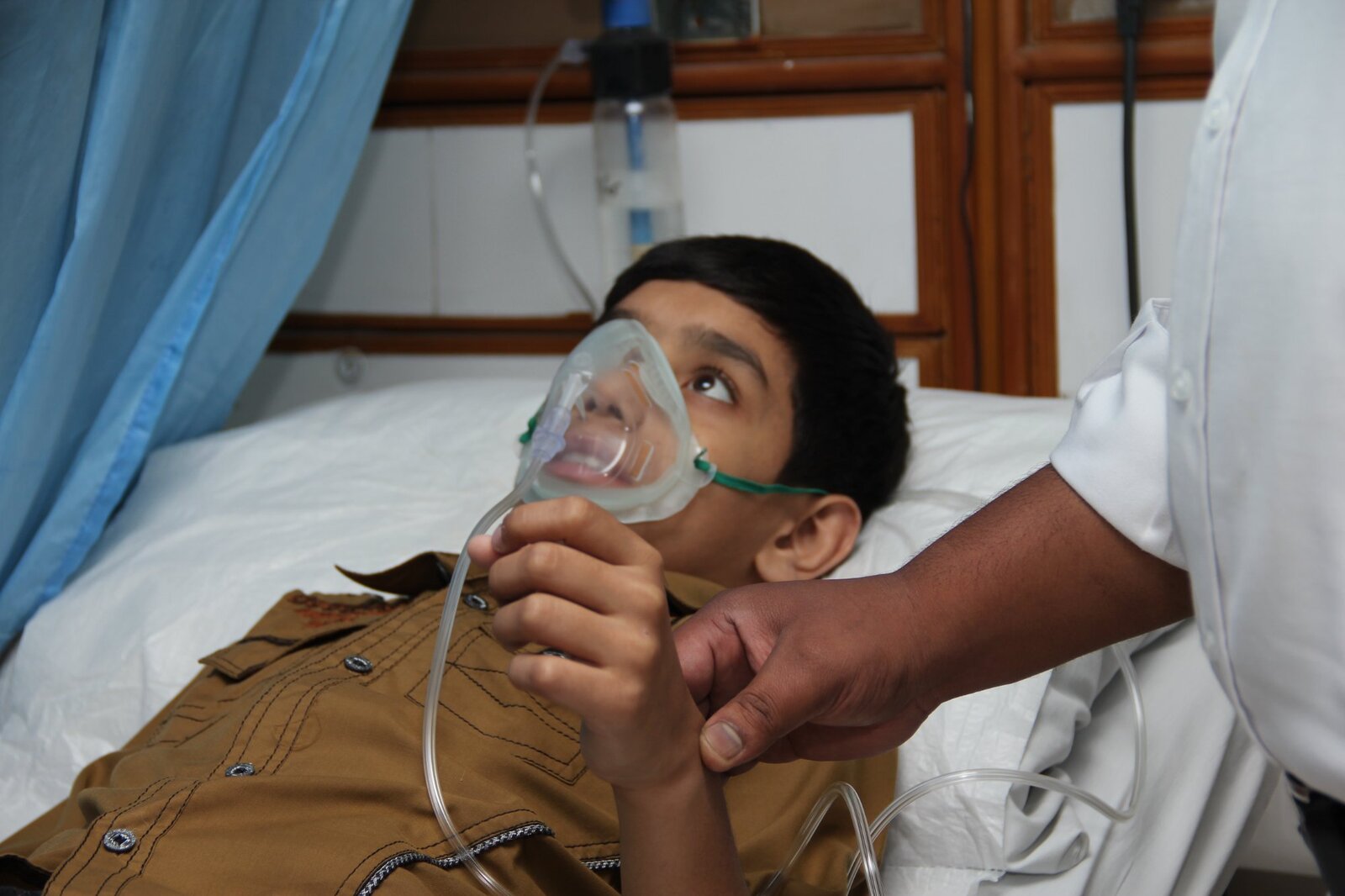
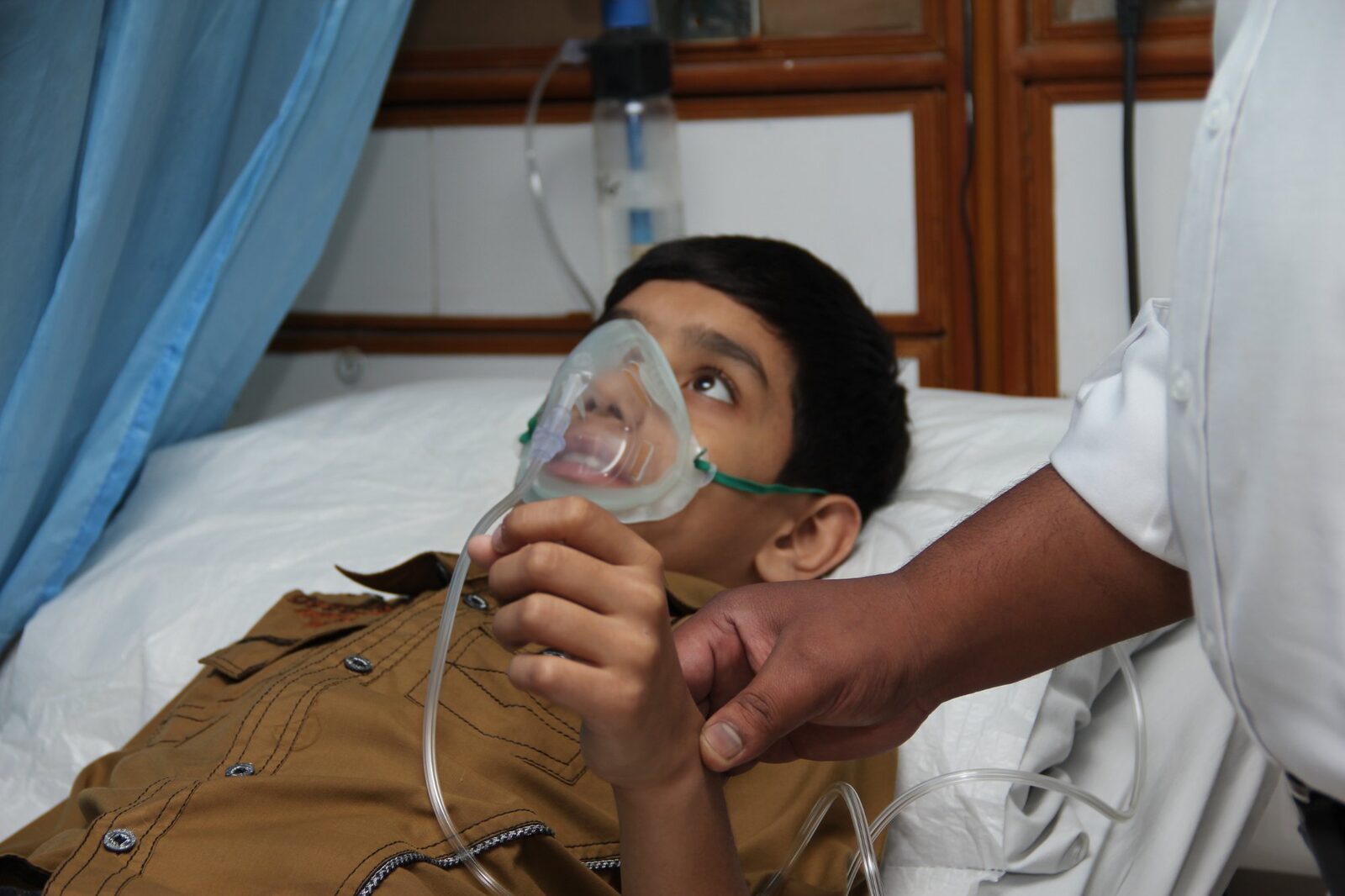
The pulmonologist administered nebulised bronchodilators, intravenous corticosteroids, and oxygen. Hassan's airways began to open. His colour returned. By 2 a.m., he was breathing comfortably. By 6 a.m., he was sitting up and asking for water. By the next morning, he was discharged with a prescription, a follow-up appointment, and a stern but kind lecture from the doctor about staying away from drains in winter.
His mother arrived just as he was being released. She had been told what happened. She thanked the team in a small, broken voice. Then she sat in the hallway and cried for ten minutes, because she finally allowed herself to feel how close she had come to losing her son.
What Hassan's care actually cost JMT
- Emergency assessment & specialist on-call Rs 8,500
- Nebulised bronchodilators & corticosteroids Rs 6,000
- Oxygen therapy & monitoring (12 hours) Rs 14,000
- Discharge medication & follow-up Rs 3,500
Why this story matters
Hassan's story is not just about one boy being saved on one cold night in Lahore. It is about what twenty years of one woman's quiet, relentless insistence can build. Mrs. Zareen lost her own daughter Jahanara because there was no specialist on-call when she needed one. She decided that no other parent should have to live that loss.
Every night that an on-call pulmonologist is sitting beside a child in the JMT Emergency Room, Jahanara's memory is doing its silent work. Every time a rickshaw arrives in twelve minutes instead of thirty, her name is being honoured. This is what trust money builds. This is what your donations sustain.
"Twenty years ago I lost a daughter because the system failed her. Today, I work so that the system fails no one."